
Food Safety Guidelines for Iftar Box Items During Ramadan
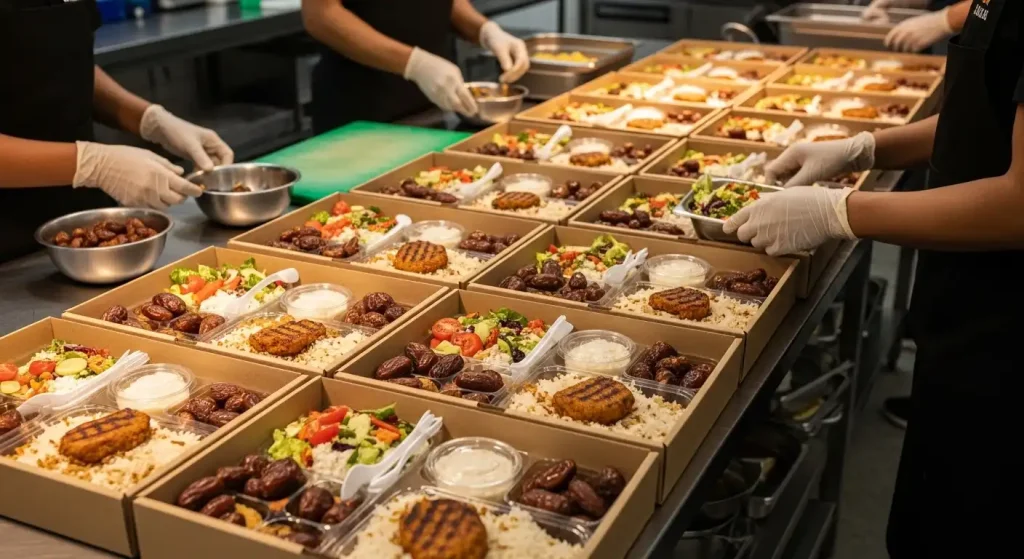
Are your Iftar Box Items Safe? Here is what you should keep in mind
Many hosts across the UAE focus so much on what goes into an iftar box that they give almost no thought to how safely it was prepared, stored, and delivered before it arrived at their table.
By the end of this guide, you will understand exactly what food safety standards should look like for iftar box items during Ramadan and why those standards matter as much as the menu itself.
Why Food Safety Is More of a Concern during Ramadan?
Food safety during Ramadan carries a weight that it does not carry at other times of the year. Guests breaking their fast have digestive systems that have been at rest for an extended period, which makes them significantly more sensitive to foodborne issues than they would be after a normal day of eating.
A food safety failure during iftar is not just an inconvenience. For vulnerable guests, it can become a genuine health issue that unfolds hours after the gathering has ended.
In the UAE, where Ramadan catering operates on an enormous scale, providers are managing high volumes, tight delivery windows, and demanding logistics all at once. That operational pressure is exactly when food safety corners are most likely to be cut, which is why understanding what proper standards look like helps you ask the right questions before placing any iftar food box order.
What Safe Iftar Box Items Actually Look Like
The safety of iftar box items begins long before the food reaches your door. It starts with ingredient sourcing from verified suppliers, continues through hygienic preparation in a certified kitchen, and is maintained through every stage of packaging and transit. Each of those stages introduces potential risk points, and a provider with genuine food safety standards has addressed all of them systematically rather than leaving any to chance.
Safe iftar box items are prepared in kitchens that operate under UAE food authority guidelines, using ingredients stored at correct temperatures from the moment they arrive. Cross-contamination between raw and cooked components is prevented through physical separation of preparation areas. Staff handling iftar food box contents follow strict personal hygiene protocols, including glove use, regular handwashing, and exclusion from food preparation when unwell. These are not exceptional standards. They are the baseline that every provider serving Ramadan catering in the UAE should be meeting without exception.
Packaging Standards That Protect the Food
The packaging of an iftar packaging box is not just a presentation consideration. It is a food safety mechanism. Proper packaging maintains temperature, prevents contamination during transit, and ensures that the integrity of every iftar box item is preserved from the moment it leaves the kitchen to the moment it is opened by your guest.
Hot iftar food box items should be sealed in containers that retain heat effectively and prevent steam from compromising the food’s texture or safety. Cold components require separate insulated packaging that maintains safe temperatures throughout the delivery journey, which in the UAE heat means purpose-designed thermal containers rather than standard food boxes.
An iftar packaging box that arrives with compartments that have leaked into each other, temperatures that feel wrong, or seals that appear compromised should be treated as a food safety concern, not just a quality complaint.
Temperature Control Throughout the Delivery Chain
Temperature control is the single most critical food safety variable in Ramadan catering logistics. Bacteria multiply rapidly in the temperature range between four and sixty degrees Celsius, which food safety professionals refer to as the danger zone. Any iftar food box that spends significant time in that range during preparation, holding, or transit is carrying a risk that guests cannot detect by smell or appearance alone.
Reputable catering providers in Abu Dhabi and Dubai manage this through a combination of hot-holding equipment for cooked items, refrigerated storage for cold components, and insulated delivery packaging that minimizes temperature drift during transit. For iftar pack orders covering large events or multiple delivery locations, the challenge of maintaining temperature control across the full delivery run is significant. Ask any provider you are considering how they manage temperature across their full delivery chain, not just for the first box delivered but for the last one as well.
Storage Guidelines Before and After Delivery
Understanding how to handle your iftar special box correctly after it arrives is just as important as the standards applied during preparation. If your delivery arrives before iftar time, hot items should be kept in a warm oven at a low temperature, and cold items should be refrigerated immediately rather than left at room temperature.
Leaving a fully assembled iftar pack sitting on a counter in a warm UAE home or office for more than an hour before serving introduces the same temperature danger zone risk that applies during transit.
Leftover iftar box items should be refrigerated within two hours of serving and consumed within twenty-four hours. This applies regardless of how well the food was originally prepared, because the combination of the UAE ambient temperature and the natural bacterial activity in cooked food means that extended room temperature storage is never safe.
Certifications and Compliance to Look For
When evaluating iftar food box providers in the UAE, asking about food safety certifications is not an unreasonable request. It is the most direct way to verify that a provider’s safety claims are backed by independent verification rather than just marketing language. Reputable catering companies operating in Abu Dhabi and Dubai hold current certifications from the relevant UAE food safety authorities, and they will share that information readily when asked.
Beyond certifications, look for providers who conduct regular internal audits of their kitchen and delivery processes, train their staff on food safety protocols as an ongoing practice rather than a one-time induction, and have clear procedures in place for managing a food safety incident if one occurs. An iftar special box provider who can speak confidently and specifically about their compliance processes is giving you a strong signal that food safety is genuinely embedded in how they operate, not just referenced in their marketing materials.
What to Check When Your Iftar Pack Arrives
Even with a fully certified and reputable provider, taking thirty seconds to check your delivery when it arrives is a sensible habit that protects your guests. Look at the seals on each iftar packaging box container before opening them. Any seal that appears broken, inflated, or leaking should be flagged with the provider immediately rather than served. Check that hot items are genuinely hot and cold are genuinely cold, because temperature is one of the most reliable visible indicators of whether the cold chain has been maintained.
If anything about the delivery looks or smells wrong, trust that instinct and contact the provider before serving the food to guests who have been fasting all day. A reputable catering company offering iftar box items in Abu Dhabi or Dubai will respond to a food safety concern seriously and quickly. A provider who dismisses or deflects a legitimate safety question is telling you something important about how seriously they take the standards they claim to uphold.
Conclusion
Food safety for iftar box items during Ramadan is not a background consideration. When you choose a provider in Abu Dhabi or Dubai who holds genuine certifications, maintains temperature control across the full delivery chain, and uses iftar packaging box standards designed to protect the food from kitchen to table, you are making a decision that your guests will never have to think about because everything will simply be right.
Discover our food safety standards at XL Catering and book without issues.
Here is a link to our contact form.
FAQs
What food safety standards should iftar box items meet in the UAE?
Iftar box items should be prepared in UAE food authority-certified kitchens, stored and transported at correct temperatures throughout the delivery chain, and packaged in sealed containers that prevent contamination and maintain food safety from preparation through to serving.
How should I store an iftar food box if it arrives before iftar time?
Hot iftar food box items should be kept warm in a low oven, and cold components should be refrigerated immediately on arrival, as leaving a fully assembled iftar pack at room temperature in the UAE heat for more than an hour introduces a genuine food safety risk.
What should I look for in an iftar packaging box to confirm it is safe?
Check that all seals are intact and uncompromised when the delivery arrives, confirm that hot items are genuinely hot and cold items are properly chilled, and contact the provider immediately if anything looks, smells, or feels wrong before serving guests who have been fasting.
