
Healthy School Meals Catering in UAE: What ADEK and KHDA Standards Actually Require
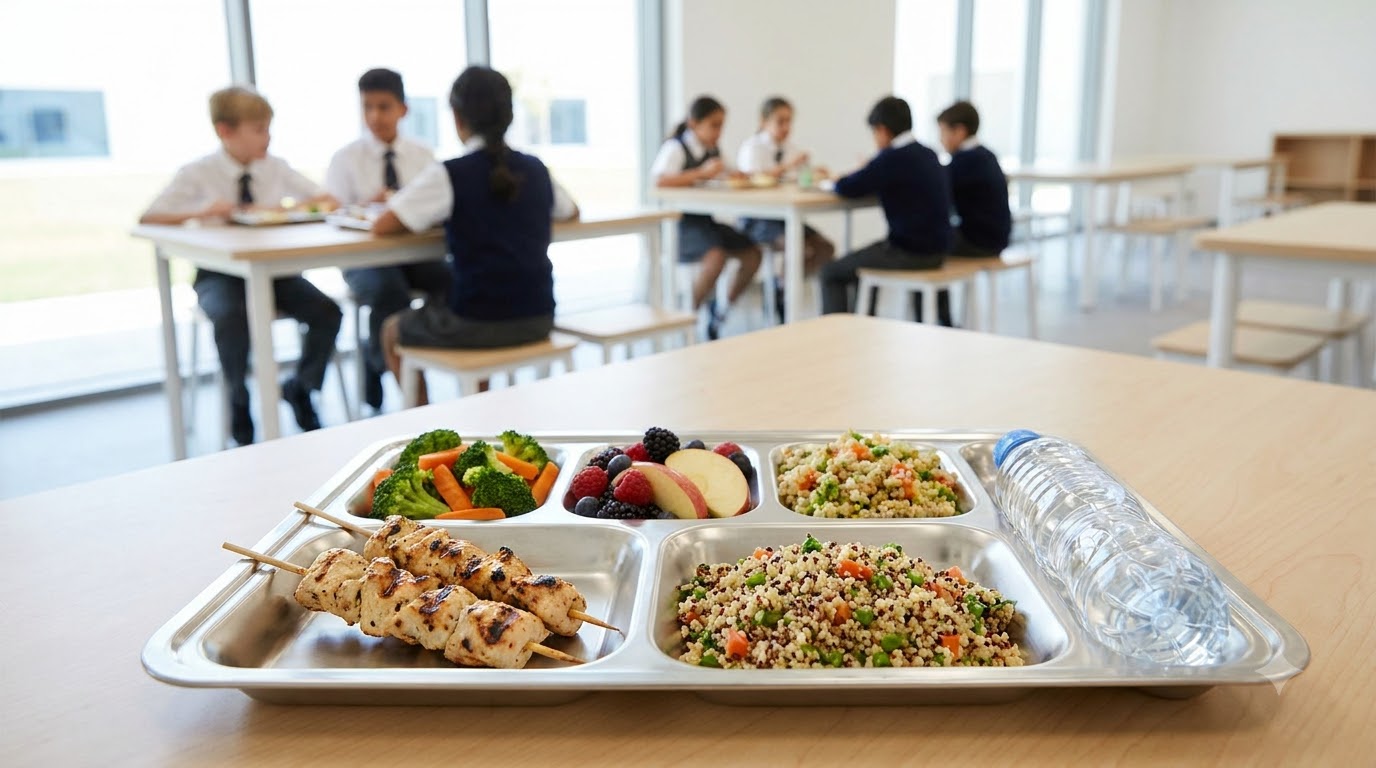
UAE Childhood Obesity and the Importance of Healthy School Meals
In 2022, school health checks put obesity among UAE children aged 5 to 17 at 17.35 percent. A 2024 study in the journal Cureus reported the figure.
Schools see these children five days a week. So regulators now treat the canteen as part of public health, not just a place to buy lunch.
For a school or a caterer, that means rules. Many of them. This guide explains what the national school food guide, ADEK, and Dubai authorities expect, in plain terms.
Who Sets the Rules for School Meals in the UAE
Three layers apply, and they overlap.
The first is the National Guide for Food and Beverages in the School Environment, issued by UAE health authorities. It covers public, private, independent, and vocational schools. It also names food suppliers and canteen operators. So a caterer carries duties under it, not just the school.
The second is Abu Dhabi’s own layer. ADEK’s School Food and Nutrition Policy points schools to the Abu Dhabi Guideline for Unified School Nutrition and Food Safety, known as ADG2. The Quality and Conformity Council issued the 2025 edition.
The third is Dubai. There, private schools sit under KHDA, while canteen food rules come through Dubai Municipality and Dubai Health Authority guidance.
A caterer working across both emirates needs to meet all three layers.
What ADEK Requires from School Canteens in Abu Dhabi
ADEK’s policy took effect in the 2024/25 academic year. Schools have since had to bring their canteens in line with it.
The core duty is simple to state. Schools that offer food must serve healthy, nutrient-rich food in line with the Abu Dhabi guideline. They must also hold the necessary valid licences.
Several practical rules follow from that. Teachers and canteen staff must attend training run by the Abu Dhabi Public Health Centre. Schools must keep records of student food allergies and make them available in the canteen. Food labels must state any allergens.
Schools must also tell parents which foods are prohibited. They must check that home-packed lunchboxes meet the guidelines. And ADEK has banned food delivery services during school hours.
None of this is optional. A school that outsources its canteen still answers for it.
Schools considering outsourced food operations should also understand the benefits of professional school canteen catering services in the UAE and how specialist providers can manage daily operations and compliance.
What the National Guide Bans
The national guide sets a clear list of prohibited items in the school environment.
It covers sugary drinks, energy drinks, tea, and coffee. It also covers confectionery, fried snacks, processed meats, cakes, and doughnuts. Foods that contain nuts or nut-based products are on the list too.
The guide also changes how schools deal with parents. Parents get access to canteen menus. Food-related complaints must be recorded, along with the action taken.
That second point matters for caterers. Your menu is no longer a private document. Parents can read it. They can compare it to the banned list. And they can complain.
What Applies in Dubai
Dubai’s canteen rules came from a guidebook drawn up by Dubai Health Authority and Dubai Municipality. It covers the type of food sold, along with hygiene and safety standards in preparation.
Dubai Municipality’s Food Control Department monitors compliance. The municipality has also asked school canteens to have at least one Person in charge of food safety.
On top of this, the national guide applies to Dubai schools as well. So a Dubai school canteen follows the municipal food safety rules and the national food list together.
Check the current KHDA and Dubai Municipality documents before you finalise any menu. Rules change, and your school’s inspector will use the latest version.
Where School Meals Programmes Go Wrong
Most failures are small. They are also easy to avoid.
A menu starts compliant, then drifts. A cake returns for a birthday. A fried item sneaks back in because students like it. Nobody checks the list again.
Allergen labels go missing. A dish changes supplier, but the label stays the same. For a child with a nut allergy, that gap is serious.
Training records lapse. A new cook joins in October. Nobody books the course. An inspector asks for the certificate in November.
Menus also fail to reach parents. The national guide expects parents to see them. Many schools post them late, or not at all.
Beyond regulatory compliance, schools should also consider whether students actually enjoy the meals being served. Our guide to school food services UAE explains how to develop student-friendly menus while maintaining nutritional standards.
Each of these is a process failure, not a cooking failure. A caterer with good systems catches them. One without systems finds out during an inspection.
How to Check That a Caterer Is Compliant
Ask for documents, not promises.
Before selecting a provider, school administrators should also explore this complete guide to school canteen catering in Abu Dhabi and Dubai, covering catering models, food safety, menu planning, and provider selection.
Start with licences. A caterer should show current permits for the emirate where your school sits. Next, ask for staff training records covering food safety, nutrition, and hygiene.
Then ask about allergens. Who identifies them? Who writes the labels? What happens when a recipe or supplier changes? You want a written process with a named owner.
Ask to see a sample term menu. Check it line by line against the banned list. Look at the snacks and baked items first, because that is where problems hide.
Beyond regulatory compliance, schools should evaluate how to choose a private school catering partner in Abu Dhabi that understands their educational values, student dietary needs, menu expectations, and service requirements.
Finally, ask how complaints are handled. The national guide expects a record and a response. A caterer should already have a log and a simple way to share it with the school.
If a provider cannot answer these questions in one meeting, keep looking.
How XL Catering Handles School Compliance
XL Catering builds school menus against the national guide and the rules of the emirate where the school sits.
Banned items stay off the menu. Allergens are labelled on every dish. Training records for kitchen and serving staff are kept ready for inspection. The school receives the menu in advance, so parents can see it.
Every school contract starts with a review of the student population, dietary needs, and the school’s own food policy. The menu comes from that review, not from a template.
Compliance is also part of the wider daily operation. Read how XL Catering manages school canteen operations end-to-end in Abu Dhabi, including staff training, food safety records, allergen management, and reporting.
Conclusion
Healthy school meals in the UAE are now a matter of compliance as much as nutrition. The national guide, ADEK, and Dubai authorities all set clear expectations, and parents can see the menu.
The safest approach is simple. Choose a caterer who can show documents, explain their allergen process, and check every menu against the banned list.
To talk through school meal compliance for your campus, contact us at XL Catering today.
Frequently Asked Questions
- What does healthy school meals catering in the UAE involve?
It means serving nutrient-rich meals that follow the national school food guide and local emirate rules. It also covers allergen labelling, trained staff, and menus that parents can see. - What are ADEK school nutrition standards?
ADEK’s School Food and Nutrition Policy requires schools to serve healthy food in line with the Abu Dhabi guideline (ADG2). It also sets rules on staff training, allergen records, and prohibited foods. - Do ADEK rules apply to outsourced school canteens?
Yes. The school remains responsible for its canteen, even when a caterer runs it. The caterer must follow the same guidelines. - What are the KHDA canteen requirements in Dubai?
KHDA oversees private schools in Dubai. Canteen food rules come through Dubai Municipality and Dubai Health Authority guidance, plus the national guide. Check the latest documents with your school. - Which foods are banned in UAE school canteens?
The national guide bans sugary drinks, energy drinks, tea, coffee, confectionery, fried snacks, processed meats, cakes, doughnuts, and foods that contain nuts. - Can parents see the school canteen menu?
Yes. Under the national guide, parents get access to canteen menus. Schools must also record food complaints and the action taken. - Do canteen staff need training under healthy canteen UAE regulations?
Yes. In Abu Dhabi, teachers and canteen staff must attend training run by the Abu Dhabi Public Health Centre. Keep the certificates ready for inspection. - Are food deliveries allowed in Abu Dhabi schools during school hours?
No. ADEK has banned food delivery services during school hours as part of its tighter food policy. - How can a school check school meal compliance in the UAE?
Ask the caterer for licences, training records, a written allergen process, and a sample menu. Compare the menu against the banned list. - Does XL Catering provide healthy school meal catering in the UAE?
Yes. XL Catering builds school menus around the national guide and local emirate rules, with allergen labelling and menus shared with the school.
