
Pachadi, Avial, Parippu: Deep Dive into Authentic Onam Sadya Flavours
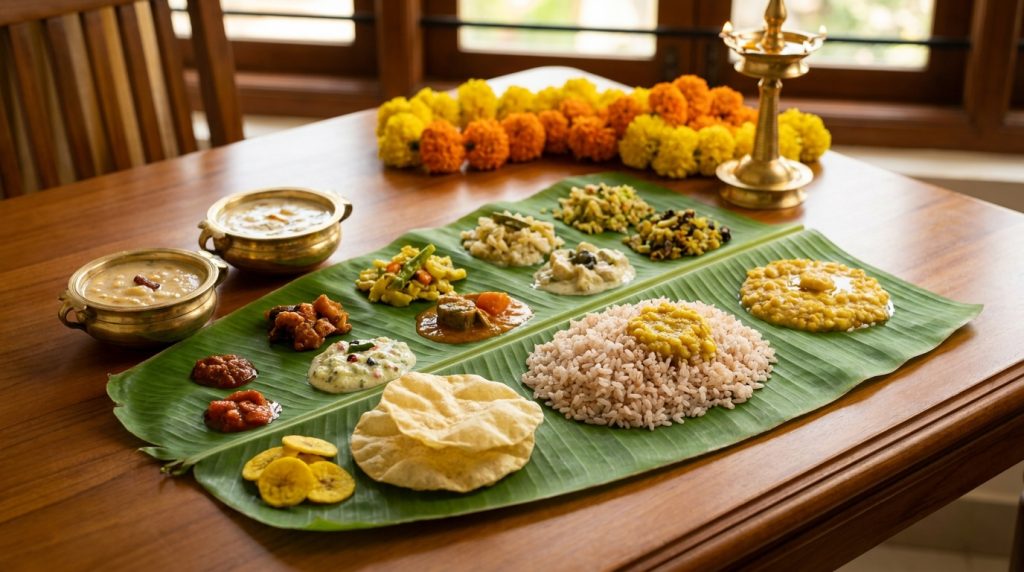
What Makes an Authentic Onam Sadya Truly Special
Anyone can put twenty dishes on a banana leaf and call it a Sadhya. What separates a Sadhya worth travelling across the city for from one that disappoints before the Pappadam is finished is the craft behind each dish. The balance of a good Avial, the depth of a slow-cooked Sambar, the exact sweetness of a Palada Payasam. These are not things that happen by accident, and they are not things a kitchen without genuine Kerala experience can fake.
For Kerala expats in the UAE looking for authentic Onam Sadhya catering in Abu Dhabi, this is the piece that tells you what to expect from a caterer who actually knows the food.
If you’re looking for a complete overview of every dish served during the feast, explore our Complete Onam Sadya Menu: All 26 Dishes Explained before diving into the preparation techniques behind each one.
Parippu: The First Taste That Sets the Standard
freThe Sadhya begins with Parippu, and how it is made tells you almost everything you need to know about the kitchen that prepared it.
Moong dal cooked down to the right consistency, finished with freshly ground coconut, and served with a pour of proper ghee over hot rice. That is the foundation. The ghee is not a garnish, and it is not optional. A Sadhya that arrives without good ghee for the Parippu has already missed the point.
The coconut paste in a well-made Parippu is ground fresh. The difference between fresh ground coconut and the desiccated or pre-processed version is not subtle. It changes the texture, the sweetness, and the overall character of the dish entirely. A caterer who cuts this corner will cut others, too.
Avial: The Dish That Has No Margin for Error
Avial is arguably the most technically demanding dish on the Sadhya leaf, and it is the one that most quickly reveals whether a kitchen knows Kerala food or is approximating it.
The vegetables need to be cut to the right size and cooked to the point where they are just done, holding their shape without being soft or mushy. The coconut and yoghurt base needs the right ratio, enough coconut to give it body and enough yoghurt to give it its characteristic gentle sourness. The finishing of raw coconut oil and fresh curry leaves is applied after the heat is off, which is what keeps the aroma alive when it reaches the table.
An Avial that has been sitting in a container for hours before serving loses that finish entirely. The coconut oil smell fades, the curry leaves lose their fragrance, and the whole dish flattens out. This is one of the clearest signs of a Sadhya that was made too far in advance.
When evaluating a caterer for authentic Onam Sadhya dishes in the UAE, ask specifically about how and when the Avial is made. A kitchen that prepares it fresh on the day and finishes it correctly will tell you so without hesitation.
Sambar: Slow-Cooked and Non-Negotiable
Onam Sambar is not the thin, sharp Sambar served at most South Indian restaurants in the UAE. It is thicker, more complex, and built around a freshly ground coconut masala that gives it a richness and depth that the packet powder version simply cannot produce.
The vegetables, typically drumsticks, pearl onions, and tomato, need time in the pot. The tamarind needs to be properly extracted rather than squeezed quickly. The coconut masala needs to be roasted and ground on the day. None of this is complicated for a kitchen that cooks this food regularly. All of it is obvious when it has been shortcut.
A good Onam Sambar has a colour that comes from properly tempered ingredients and slow cooking, not from an excess of chilli powder added to compensate for a weak base. The flavour should be layered, with the tamarind and coconut working together rather than one drowning out the other.
Erissery: Where the Roasted Coconut Makes or Breaks It
Erissery is one of those Sadhya dishes that looks simple and is deceptively easy to get wrong. Pumpkin and lentils cooked together with coconut and spices, finished with a tempering of mustard seeds, dried chilli, and roasted grated coconut on top.
The roasted coconut is what defines a good Erissery. It needs to be taken to the right colour, deep golden without burning, and added at the end so it stays textured rather than softening into the dish. When it is done correctly, every spoonful has that slightly smoky, nutty note from the coconut that lifts the whole thing.
When it is done incorrectly, the coconut is either raw and pasty, absent entirely, or mixed in too early and lost. The dish becomes sweet and flat without it, and no amount of extra spice corrects that.
Olan: The Dish That Should Not Be Rushed
Olan is the quietest dish on the Sadhya leaf and one of the most revealing. White pumpkin and cowpeas in thin coconut milk, finished with coconut oil and green chillies. No strong spices, no tamarind, no complex masala. Just clean ingredients treated with care.
Because Olan has nowhere to hide, a kitchen that rushes it or uses poor-quality coconut milk produces something that tastes watery and flat. The coconut milk should be properly extracted, the pumpkin should be cooked until soft but not falling apart, and the coconut oil finish should be light and fragrant.
Guests who know their Sadhya always eat the Olan carefully. It is the dish that signals whether the kitchen has patience, and patience is what authentic Onam Sadhya cooking requires throughout.
Pachadi and Kichadi: The Yoghurt Dishes That Balance the Leaf
A Sadhya without the yoghurt-based dishes is a Sadhya out of balance. Pachadi and Kichadi provide the cool, tangy counterpoint to the richer and more intensely spiced dishes on the leaf, and they need fresh, good-quality yoghurt to work properly.
Beetroot Pachadi is one of the most visually striking dishes on the leaf, its deep pink-red against the green banana leaf. The sweetness of the beetroot, the tang of the yoghurt, and the crunch of the coconut tempering need to be in proportion. Too much beetroot sweetness and it becomes cloying. Too much yoghurt sourness, and it loses the beetroot entirely.
Kichadi, usually made with cucumber or raw mango, should be cooling and mild, a reset for the palate between the heavier dishes. Both should be made with yoghurt that is fresh on the day, because yoghurt that has been sitting too long adds an unwanted sharpness that throws the dish off entirely.
Thoran: Simple, Fresh, and Honest
Thoran is a dry dish, and exactly because of that, there is no sauce or gravy to cover up a poor execution. Finely shredded vegetables stir-fried with fresh grated coconut, mustard seeds, and curry leaves. Cabbage and carrots are the most common choices.
The coconut must be fresh. The vegetables must be shredded finely enough to cook quickly and evenly. The tempering must go into hot oil so the mustard seeds pop properly and the curry leaves release their fragrance. And the dish must stay dry throughout. A Thoran that has released water and become wet has been overcooked or made with vegetables that were not properly dried before cooking.
It is a small dish on the leaf, but it is one that experienced Sadhya eaters pay attention to, because a well-made Thoran reflects a kitchen that respects every part of the meal equally, not just the showpiece dishes.
Pulissery: The Sour Note That Cleanses the Palate
A ripe mango or pineapple Pulissery, cooked in spiced yoghurt and finished with a coconut tempering, serves a specific purpose on the Sadhya leaf. It cuts through the richness of the ghee-heavy dishes and resets the palate for what comes next.
The yoghurt base should not be over-spiced. The fruit should be soft and fully cooked into the curry, giving it a gentle sweetness that balances the sourness of the yoghurt. The coconut tempering at the end should be done in coconut oil, not vegetable oil, because the flavour is not interchangeable.
Pulissery is another dish that suffers significantly if made too far in advance. The yoghurt continues to sour after cooking, and a Pulissery that was made the previous day will be noticeably sharper than one made fresh.
Payasam: The Finish That Everyone Remembers
If guests remember one thing about a Sadhya, it is the Payasam. A proper Onam feast should include at least two varieties, and both should be served at the right temperature with the right consistency.
Palada Payasam, made with rice flakes slow-cooked in reduced milk, is the one that takes the most time and the most attention. The milk needs to be reduced properly over low heat, the rice flakes need to be soft without dissolving, and the sweetness needs to be measured. A Palada that has been rushed through a quick cook has a thin, watery base that gives away the shortcut immediately.
Parippu Payasam, made with lentils, jaggery, and coconut milk, has a deeper, more complex sweetness. The jaggery should be of good quality, the coconut milk should be freshly extracted, and the lentils should be properly cooked before the coconut milk goes in. Adding coconut milk to undercooked lentils and hoping it comes together is not how this is done.
The Payasam is where a caterer who genuinely knows this food earns the trust of every guest at the table.
What This Means When You Are Choosing an Onam Caterer in Abu Dhabi
Every dish described in this piece has specific markers that separate an authentic version from an approximate one. When you are looking for authentic Onam Sadhya dishes in the UAE and evaluating caterers, you now have the language to ask the right questions.
Ask about the Avial finishing process. Ask whether the Sambar uses a freshly ground coconut masala. Ask when the Payasam is made and how the milk is reduced. Ask whether coconut oil is used throughout or substituted with vegetable oil. A caterer who knows this food will answer these questions without hesitation and with the kind of detail that only comes from actually cooking it.
If you’re planning a complete festive meal, our Vegetarian Onam Sadya Catering UAE guide explains how to choose the right catering service for an authentic and stress-free Onam celebration.
After choosing the right caterer, read From Pookalam to Payasam: Planning the Perfect Onam Party for practical tips on planning the rest of your Onam celebration, from the Pookalam and programme to serving the Sadhya.
Great Onam celebrations combine authentic food with meaningful traditions. Learn how a beautifully crafted flower carpet complements the Sadhya in The Art of the Pookalam: Flower Carpets & Grand Sadya in Abu Dhabi.
XL Catering prepares its Onam Sadhya with fresh ingredients, Kerala-experienced kitchen staff, and the care that every dish on this list demands.
If you are planning an Onam event in Abu Dhabi in 2026 and want a Sadhya that your guests will recognise as the real thing, get in touch with XL Catering to discuss your event.
This Onam, skip the kitchen stress and bring the real taste of Kerala to your table. XL Catering’s authentic 30-dish Onam Sadhya is available as takeaway Sadhya boxes or as full-service catering for homes, offices, and community gatherings right here in Abu Dhabi.
Order Your Onam Sadhya in Abu Dhabi →
Frequently Asked Questions
Which Onam Sadhya dishes are hardest to get right for catering in the UAE?
Avial, Palada Payasam, and Sambar require the most skill and the most time. These are also the dishes that suffer most visibly when made in advance or prepared without a genuine Kerala cuisine experience.
How do I know if a caterer in Abu Dhabi can deliver authentic Onam Sadhya dishes?
Ask specific questions about preparation: when dishes are made, whether coconut is freshly ground, whether coconut oil is used for finishing, and whether banana leaf service with correct dish placement is included. The answers will tell you what you need to know.
